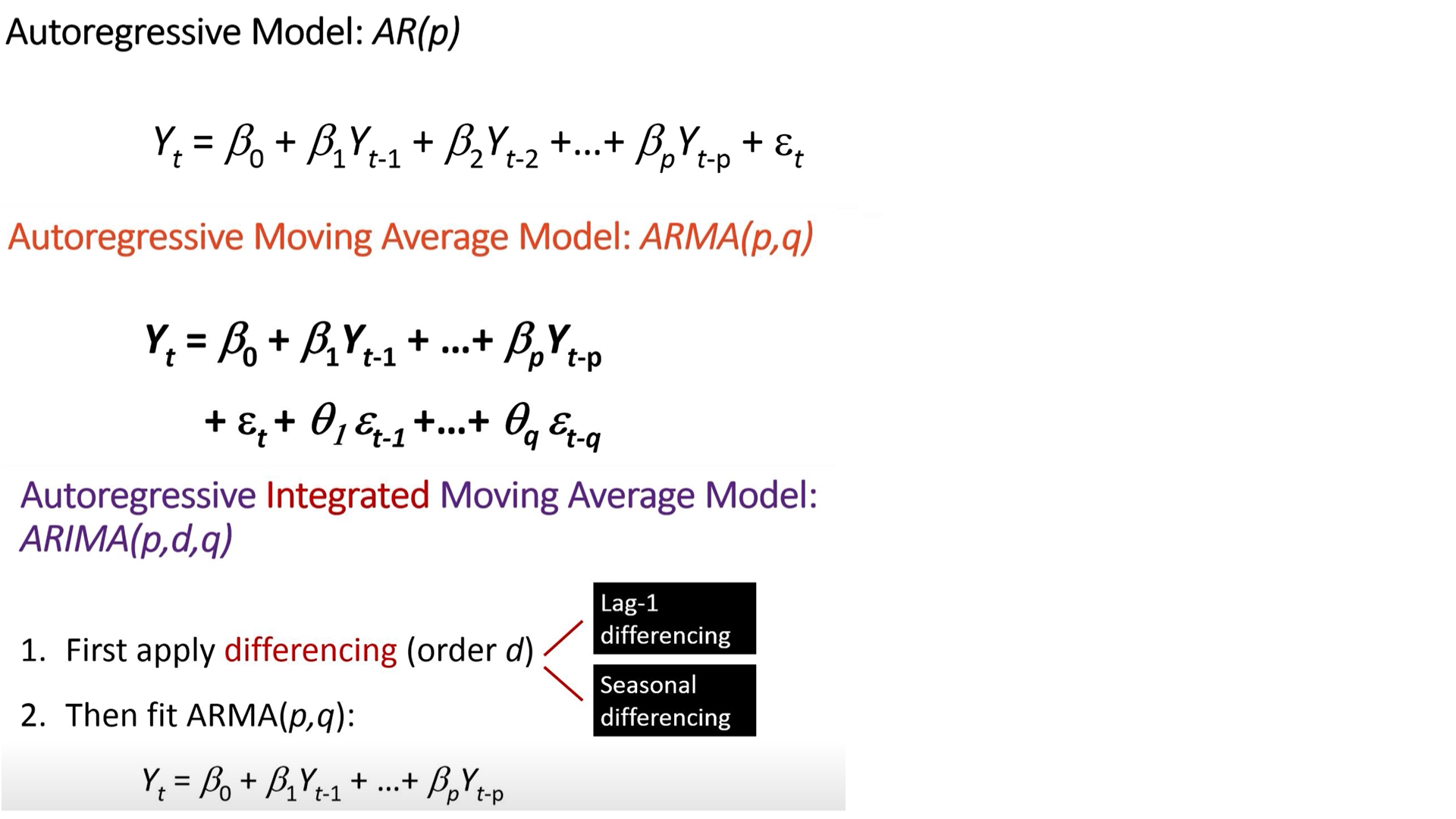
https://www.youtube.com/watch?v=Z0Xuvwi0838
Delivering services privately in your VNet with Azure Private Link BRK3168
You tube - Marc Kean Need to subscribe
https://www.keepsecure.ca/blog/azure-storage-network-security/
https://www.keepsecure.ca/blog/snowflake-storage-integration-and-azure/


https://towardsdatascience.com/data-domains-and-data-products-64cc9d28283e
https://towardsdatascience.com/data-mesh-topologies-85f4cad14bf2
https://docs.microsoft.com/en-us/azure/cloud-adoption-framework/scenarios/data-management/
Search for Piethein Strengholt to get Azure Data Mesh Patterns.
https://piethein.medium.com/
Pandas - Links
https://github.com/tommyod/awesome-pandas
SQL alchemy
https://docs.sqlalchemy.org/en/14/core/engines.html
https://www.sentryone.com/blog/access-sql-server-databases-from-python
https://www.statisticssolutions.com/free-resources/directory-of-statistical-analyses/data-levels-and-measurement/
Visualization Analysis and Design,Tamara Munzner,A K Peters,Much of the course material is taken from this book
Making Data Visual,Danyel Fischer & Miriah Meyer,O'Reilly,Very good introductory text
https://www.youtube.com/watch?v=9yNmTucj6HU&list=PLfxl5dzojKr4K_NtVFKDnecP3mUp8K6Fj&index=5


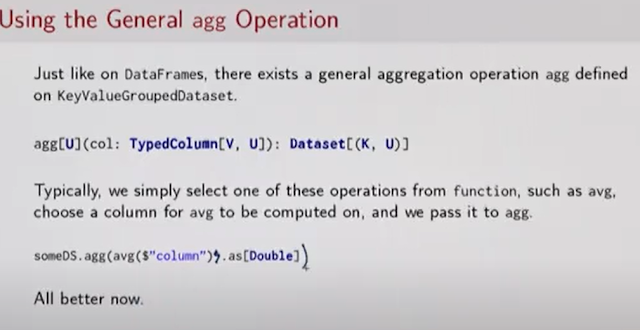

https://www.composablesystems.org/17-400/fa2020/schedule/
https://www.composablesystems.org/17-400/fa2020/#course-information
https://heather.miller.am/index.html#teaching
https://heather.miller.am/teaching/cs4240/spring2018/
https://heather.miller.am/index.html#teaching
https://www.kaggle.com/jamesleslie/titanic-neural-network-for-beginners
titanic-neural-network-for-beginners :
Summary:
Create_model is the key concept in the whole algorithm.
def create_model(lyrs=[8], act='linear', pt='Adam', dr=0.0):
used GridsearchCV to find the best Hyperparameter Tuning.
Hyperparameters: batch_size , epochs , optimizer , layers and drops
Hyperparameter Tuning
Grid searchCV - batch size and epochs
batch_size = [16, 32, 64]
epochs = [50, 100]
Best: 0.822671 using {'batch_size': 32, 'epochs': 50}
===================================================
Grid searchCV - Optimization Algorithm
optimizer = ['SGD', 'RMSprop', 'Adagrad', 'Adadelta', 'Adam', 'Nadam']
Best: 0.822671 using {'opt': 'Adam'}
===================================================
Grid searchCV - Hidden neurons
layers = [[8],[10],[10,5],[12,6],[12,8,4]]
Best: 0.822671 using {'lyrs': [8]}
===================================================
Grid searchCV - Dropout
drops = [0.0, 0.01, 0.05, 0.1, 0.2, 0.5]
Best: 0.824916 using {'dr': 0.2}
===================================================
model = create_model(lyrs=[8], dr=0.2)
training = model.fit(X_train, y_train, epochs=50, batch_size=32,
validation_split=0.2, verbose=0)
Still have few questions --
a. Initial train model given val_acc: 86.53% but where as train model at the end given acc: 83.16%
b. making batch size and epochs as constant values and then the remaining hyperparmaters found the best value
rather than adding one hyperparameter and then another hyperparameter.
Credit to
https://towardsdatascience.com/https-medium-com-vishalmorde-xgboost-algorithm-long-she-may-rein-edd9f99be63d

XGBoost is a decision-tree-based ensemble Machine Learning algorithm that uses a gradient boosting framework. In prediction problems involving unstructured data (images, text, etc.) artificial neural networks tend to outperform all other algorithms or frameworks. However, when it comes to small-to-medium structured/tabular data, decision tree based algorithms are considered best-in-class right now.
The algorithm differentiates itself in the following ways:
Imagine that you are a hiring manager interviewing several candidates with excellent qualifications. Each step of the evolution of tree-based algorithms can be viewed as a version of the interview process.

System Optimization:
Algorithmic Enhancements:
Credit to
https://towardsdatascience.com/validating-your-machine-learning-model-25b4c8643fb7
The following methods for validation will be demonstrated:

Numerical data can be scaled to ensure proportionate influence on the prediction
Common techniques for scaling
So how do we do it, exactly? How can we align different features into the same scale?
Keep in mind that not all ML algorithms will be sensitive to different scales of inputted features. Here is a collection of commonly used scaling and normalizing transformations that we usually use for data science and ML projects:

In this example, you have the one column called home Type, and three different levels: House, Apartment, and Condo. The data frame has five observations for that particular feature.
With one-hot encoding, you convert this one column of home Type into three columns: a column for House, a column for Apartment, and a column for Condo. You encode each observation with either a 1 or 0: 1 to indicate the home type of that particular observation, or 0 for the other options.
============================================================
Topics related to this subdomain
Here are some topics you may want to study for more in-depth information related to this subdomain:
Scaling
Normalizing
Dimensionality reduction
Date formatting
One-hot encoding
VISUALIZING UNIVARIATE CONTINUOUS DATA
Uni-variate plots are of two types:
1)Enumerative plots and
2)Summary plots
Univariate enumerative Plots :
These plots enumerate/show every observation in data and provide information about the distribution of the observations on a single data variable. We now look at different enumerative plots.
examples:
1. UNIVARIATE SCATTER PLOT
2. LINE PLOT (with markers)
3. STRIP PLOT
4. SWARM PLOT
Uni-variate summary plots :
These plots give a more concise description of the location, dispersion, and distribution of a variable than an enumerative plot. It is not feasible to retrieve every individual data value in a summary plot, but it helps in efficiently representing the whole data from which better conclusions can be made on the entire data set.
5. HISTOGRAMS
6. DENSITY PLOTS
7. RUG PLOTS
8. BOX PLOTS
9. distplot() :
10. VIOLIN PLOTS
VISUALIZING CATEGORICAL VARIABLES :
11. BAR CHART :
12. PIE CHART :
https://www.analyticsvidhya.com/blog/2020/07/univariate-analysis-visualization-with-illustrations-in-python/